The neon-soaked vampires of Santa Carla have landed on Broadway, and critics are sharply divided. When a cult classic like The Lost Boys—the 1987 Joel Schumacher film that redefined teen horror—gets reimagined as a stage musical, expectations run high. But does this theatrical reinvention capture the anarchic spirit of the original, or does it stumble in the daylight?
Early reviews offer a mixed but compelling verdict. From praise for its bold aesthetic and energetic performances to criticism over narrative coherence and tonal imbalance, The Lost Boys on Broadway is sparking conversation. Here’s what the critics are really saying—and what it means for audiences considering a ticket.
A Stylish, But Uneven, Reimagining
The most consistent thread in early reviews is admiration for the production’s visual flair. Critics highlight the bold set design—Santa Carla’s boardwalk recreated with flickering neon, fog machines in overdrive, and a pulsing synth-heavy score that channels 1980s nostalgia. The New York Times noted, “It’s less a musical and more a sensory séance summoning the 1980s back to life,” applauding the production’s commitment to aesthetic immersion.
Yet this stylistic bravado comes at a cost. Several reviewers, including The Hollywood Reporter, argue that the spectacle overshadows storytelling. “The show dazzles more than it moves,” one critic wrote, “a disco bat flapping through a fog machine but forgetting to bite.”
The adaptation, written by playwright Amy Van Dyken and featuring music by indie-electro duo Dream Shapes, attempts to preserve the film’s balance of humor, horror, and teenage longing. But critics point to uneven pacing in the first act, where exposition drags despite high-energy dance numbers. The integration of original songs, while catchy, often interrupts emotional momentum rather than advancing it.
Still, fans of the original may appreciate the attention to iconic moments: the comic book store, the midnight bike ride, and, of course, the infamous “You’re talking about things you can’t possibly understand” scene are all reinterpreted with theatrical flair.
Vocal Performances: Strong Leads, Uneven Ensemble
Casting has drawn both praise and skepticism. Michael Cimino (no relation to the director) stars as Michael Emerson, the older brother drawn into the vampire gang. Most critics agree he delivers the show’s strongest performance—physically expressive and vocally confident, particularly in the haunting solo “Blood in the Stereo,” a new ballad exploring his internal conflict.
Emily Rudd, as Lucy Emerson, earns nods for emotional warmth, though some reviewers question whether her role was underwritten. “She’s given one big solo and a lot of bewildered glances,” wrote Variety, “a waste of a capable performer.”
The real controversy surrounds the portrayal of the vampires, particularly David, played by rising theater star Jovan Mostowy. Channeling a blend of Jim Morrison and Billy Idol, Mostowy’s David is magnetic but polarizing. Some critics call his performance “electrifying,” while others find him “over-the-top to the point of camp.” Deadline observed, “He doesn’t seduce with danger—he announces it with a spotlight.”
The ensemble, particularly the Lost Boys themselves, bring energy but inconsistent vocal balance. Harmonies in group numbers like “Forever Young (But Never Alive)” show promise but are occasionally muddy in the balcony-heavy acoustics of the Marquis Theatre.
Faithfulness vs. Innovation: Where the Critics Draw the Line
Any adaptation of a beloved film faces the “faithfulness test,” and The Lost Boys is no exception. Critics are split on whether the show honors the spirit of the original or gets lost in reinterpretation.
Those in favor of the changes argue that a direct translation would feel stale. The decision to make Sam Emerson (the younger brother) more central—and to give him a coming-of-age arc tied to outsider identity—resonates with reviewers attuned to modern storytelling. The Guardian praised this “quiet expansion of Sam’s role,” calling it “a thoughtful update that doesn’t erase the source material.”
Conversely, traditionalists argue that the humor has been sanitized. The film’s quirky, sardonic tone—driven by characters like Grandpa and the Frog brothers—is said to “fall flat” on stage. The Grandpa character, played by veteran comic actor Jerry Kern, delivers punchlines that frequently land with a thud. “The jokes,” wrote Vulture, “are still funny in theory—just not when shouted over a drum fill.”
More troubling to some is the downplaying of horror. The stage version leans harder into rock musical territory, muting the genuine dread of the original film. Without the benefit of dark cinematography and sudden jump scares, the production struggles to maintain tension. “It’s hard to fear vampires who dance in perfect sync to a bass drop,” noted The Wrap.
Music and Score: A Divisive Soundtrack
The original film’s soundtrack—featuring Echo & the Bunnymen, INXS, and Gerard McMahon’s “Cry Little Sister”—is legendary. The stage adaptation replaces most of it with original songs, a decision that has sparked debate.
The new score fuses synth-pop, glam rock, and theatrical balladry. Standout tracks include “Neon Fangs,” a swaggering anthem for the Lost Boys, and “Never Grow,” Lucy’s emotional plea to her sons. These numbers receive consistent praise for lyrical cleverness and stage presence.
But fans hoping for faithful renditions of the film’s hits may be disappointed. Only fragments of “Cry Little Sister” appear, woven into the orchestral underscore. While the creative team argues this avoids “karaoke theater,” critics are split. Rolling Stone called the choice “brave and artistically sound,” while Entertainment Weekly lamented, “It’s like remaking Grease without ‘You’re the One That I Want.’”
The band, visible in a retro-styled loft above the stage, adds to the immersive aesthetic but occasionally overpowers vocals. Sound mixing issues in early previews have since been adjusted, but some audience members in upper tiers still report difficulty hearing lyrics.
Audience Reaction: Cult Appeal or Mainstream Hit?
Critical reception doesn’t always align with audience response—and in this case, the divide may be wide. Early word from playgoers suggests a strong reaction from fans of the original film, who appreciate the nostalgic winks and costume accuracy (led by designer Dara Gold). Many report standing ovations during the final ensemble number, “Fade to Black.”
However, theatergoers unfamiliar with The Lost Boys appear less engaged. Social media threads and post-show discussions reveal confusion about character motivations and plot beats, particularly around the mythology of vampirism. Unlike Bat Out of Hell or Rocky Horror, this show assumes a baseline level of familiarity with the source.
Box office data supports a niche appeal: strong weekend sales, especially among 30- to 50-year-olds, but weaker midweek turnout. Marketing has leaned heavily into nostalgia, with tie-ins to retro vinyl releases and limited-edition comic playbills.
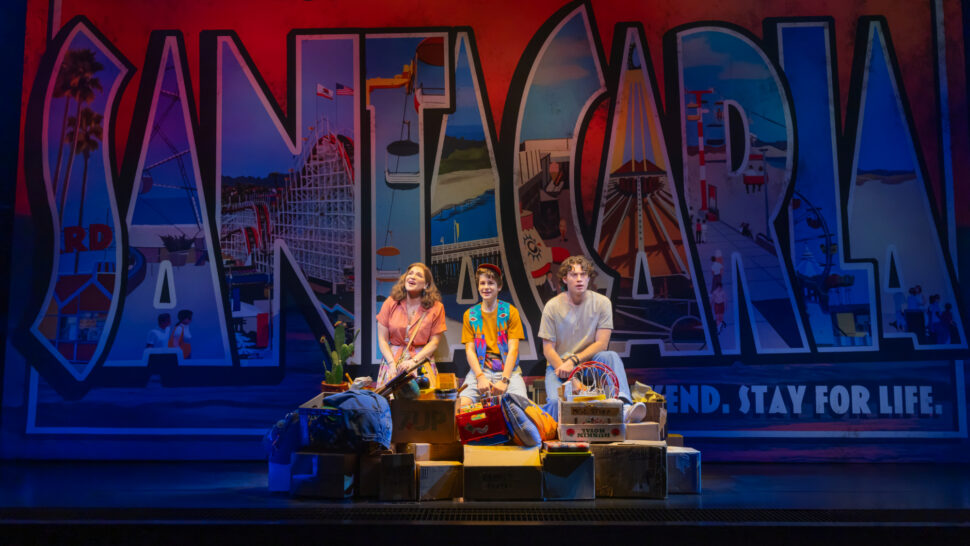
Production Design: Where the Show Truly Shines
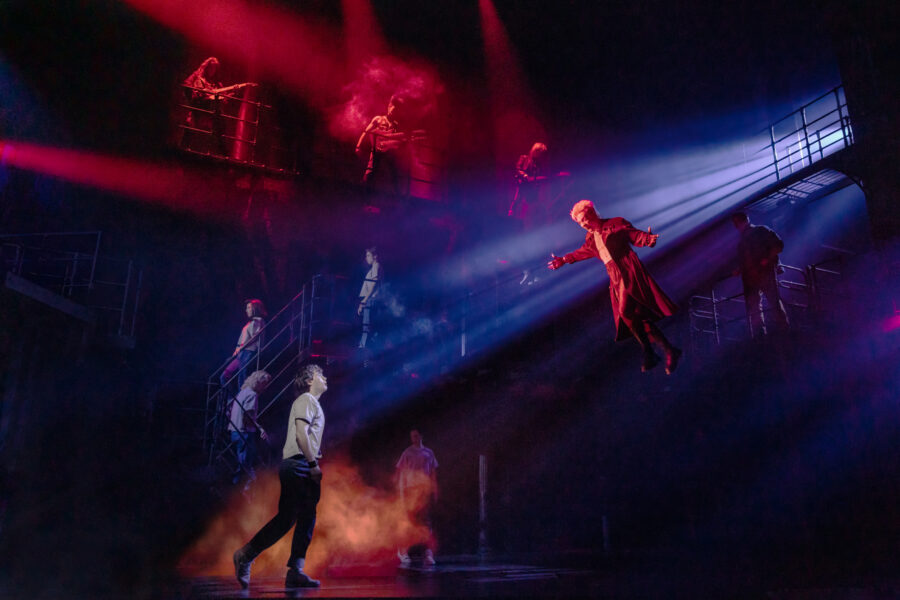
If one element unites the critics, it’s the production design. Lighting designer Lee Sandales uses shifting color palettes to mirror emotional arcs—cool blues for isolation, pulsing reds for transformation. The flying effects, particularly during the vampires’ mid-air confrontations, are described as “breathtaking” by Broadway World.
Costumes blend 1980s punk with vampire grotesquerie. The Lost Boys wear leather, studded belts, and aviators—just like the film—but with subtle decay elements: frayed hems, blood-tinged accessories. David’s final transformation scene, involving a slow-motion levitation and costume disintegration, is repeatedly cited as a highlight.
Even critics who pan the book or score concede that the show is worth seeing for its visual ambition. “It’s not the best musical of the season,” wrote The New Yorker, “but it might be the most memorable to look at.”
Final Verdict: A Flawed But Fascinating Broadway Experiment
So, what do the critics really think?
The consensus is clear: The Lost Boys on Broadway is not a masterpiece, but it’s far from forgettable. It’s a high-concept, visually daring experiment that stumbles in narrative cohesion and tonal balance but delivers on atmosphere and fan service.
For those seeking a faithful, emotionally resonant adaptation, this may not be it. But for audiences drawn to bold theatricality, nostalgic reinvention, and rock-driven storytelling, it offers a compelling night out.
Is it destined for long-term success? Probably not. But in an era of safe, algorithm-driven adaptations, The Lost Boys dares to be weird, loud, and imperfect. And sometimes, that’s exactly what cult classics are made of.
Should You See It?
If you’re a fan of the original film, go for the spectacle and homage. Bring a friend who loves 80s aesthetics or vampire lore. Manage expectations—the book is thin, and the horror is stylized, not scary.
If you’re new to The Lost Boys, consider reading a plot summary first. The show doesn’t hold your hand, and the emotional beats land harder with context.
Ultimately, the critical divide reflects a deeper truth: this isn’t a show for everyone. But for those in its target orbit, it might just be the most fun—and fang-filled—night on Broadway this season.
What are critics saying about The Lost Boys on Broadway? Critics are divided—many praise its bold visuals and energetic performances, but question its narrative depth and tonal consistency.
Is The Lost Boys musical faithful to the original movie? It captures key scenes and aesthetics but reworks character arcs and omits iconic music, prioritizing original songs and modern themes.
Who are the standout performers in the Broadway production? Michael Cimino (Michael) and Jovan Mostowy (David) receive strong reviews, though ensemble balance is inconsistent.
Does the show include songs from the original film? Most are replaced with original tracks. Fragments of “Cry Little Sister” appear in the score, but full renditions are absent.
How is the horror element handled on stage? The show leans more into rock musical than horror, with stylized violence and minimal genuine scares.
Is The Lost Boys suitable for young audiences? Rated PG-13 for thematic elements and stylized violence. Best for teens and adults familiar with the film.
Could the musical run long on Broadway? Unlikely. Strong niche appeal but mixed reviews suggest a limited engagement rather than an open-ended run.
FAQ
What should you look for in Critics Weigh In on The Lost Boys Broadway Musical? Focus on relevance, practical value, and how well the solution matches real user intent.
Is Critics Weigh In on The Lost Boys Broadway Musical suitable for beginners? That depends on the workflow, but a clear step-by-step approach usually makes it easier to start.
How do you compare options around Critics Weigh In on The Lost Boys Broadway Musical? Compare features, trust signals, limitations, pricing, and ease of implementation.
What mistakes should you avoid? Avoid generic choices, weak validation, and decisions based only on marketing claims.
What is the next best step? Shortlist the most relevant options, validate them quickly, and refine from real-world results.